


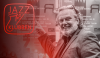





American guitarist-composer Marc Ribot’s new all-instrumental record Hurry Red Telephone took shape after a period of uncertainty following the death of double bass master Henry Grimes (1935-2020), who had played in Ribot’s previous instrumental album, Live at the Village Vanguard (Pi, 2014), in a trio with Chad Taylor, and was a powerful catalyst for many of Ribot’s ensembles. «The last gigs we did together were the best music I’ve ever participated in in my life. It took a while to find a way to start again after Henry died», Ribot says.
The album takes its name from a verse from the poem «Several Tremendous» by American poet, painter and filmmaker Richard Siken (From I Do Know Some Things, Copper Canyon Press, 2025), which depicts the poet’s efforts to rebuild his ability to write and speak after a stroke robbed him of both. It’s an apt metaphor for Ribot’s pursuit of a language that reconstructs the music from the ground up, after the loss of Grimes. The quartet format – with alto saxophonist Briggan Krauss (of Sex Mob), double bass player Sebastian Steinberg (a veteran of Shrek and other Ribot experiments of the early 1990’s), and Taylor (who first played with Ribot on his Spiritual Unity album (Pi, 2005), with Grimes and trumpeter Roy Campbell jr.) frees Ribot to explore his best qualities, being volatile, lyrical, abrasive, humorous, and soulful, and pay homage to his No Wave and free jazz background.
The album features four original compositions by Ribot alongside two compositions by Haitian guitarist and composer Frantz Casséus, Ribot’s guitar teacher and an enduring musical influence. But Ribot and his quartet and guest musicians treat these compositions as launchpads for visceral improvisation. Three pieces were recorded in Berlin while the quartet toured Europe, and the other three pieces were recorded in New York, but they all have loose, urgent, and raw qualities. The music is quintessentially Ribot, passionate, emotional, and imaginative, and encourages individual and collective interpretations of the themes, to the point of powerful, reckless abandon, best captured in Casséus’ last propulsive, festive, and uplifting piece, «Rara».
Eyal Hareuveni
Marc Ribot (guitar), Chad Taylor (drums, percussion), Hilliard Greene (double bass), Sebastian Steinberg (double bass), James Brandon Lewis (tenor saxophone), Briggan Krauss (alto saxophone), Brian Settles (tenor saxophone), David Watson (bagpipes)


