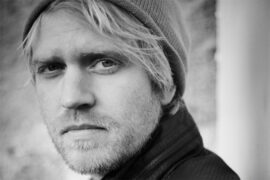













Phillip Golub is an American, Brooklyn-based experimental pianist, improviser, and composer whose music is grounded in but not constrained by his engaged practice in jazz, creative music, and new music. He describes his work as «technically audacious», bridging «distant sound worlds, negating conventions, yet building on traditions».
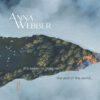
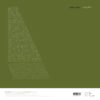
Loop 8/9 presents Golub’s two new microtonal compositions – one built from quarter tones, the other derived from just intonation – which are the third chapter in his ongoing cycle of loops, following the solo debut Filters (Greyfade, 2022) and the studio-built breakthrough Loop 7 (Greyfade, 2025). The loop in these compositions is neither a sample nor a studio technique, but a compositional form: a short cycle of harmony that recurs exactly, yet never sounds the same. Every loop pairs two outer voices – a single high note and a single low note, always struck together – with an inner current of harmony that continually recolors what those framing pitches mean.
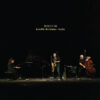
Loop 8/9 were written in Golub’s own tuning systems and focus on the inner current of harmony that runs through microtonal space: intervals lean and beat; chords resolve through regions of harmony that standard tuning leaves blank, arriving somewhere consonant by a route that shouldn’t exist. It is performed live by Golub playing microtonal grand piano (with some strings drawn down nearly a semitone from standard pitch) and recorded at Jaybird Studio in Brooklyn, and by vibes player Aaron Edgcomb, electric guitarist Ty Citerman, and synths (a Moog for the bass tones, a Prophet-10 line for the middle tones, a sine tone for the above tones) and electronics player (and producer of this album and the head of the Greyfade label) Joseph Branciforte, recorded at Greyfade Studio in Mount Vernon.
Both compositions suggest a highly disciplined, nuanced, minimalist, repetitive sonic architecture, with an immediate, hypnotic effect of being engulfed by microtonal clouds of overtones while keeping these loop cycles open. «Loop 8» employs scatters quarter tones unevenly across the keyboard: a fourteen-note pattern, recurring at the major ninth rather than the octave, bends a handful of pitches a quarter tone flat – one A-flat lowered, the A-flat above it left alone. «Loop 9» is more dramatic and borrows a twelve-note tuning built to hold a just-intonation chord in multiple transpositions – a purpose Golub then promptly abandoned, instead composing by ear with the stray intervals the system happened to contain.
Eyal Hareuveni
Phillip Golub (microtonal acoustic piano), Aaron Edgcomb (vibraphone), Ty Citerman (electric guitar), Joseph Branciforte (synthesizers, electronics)